
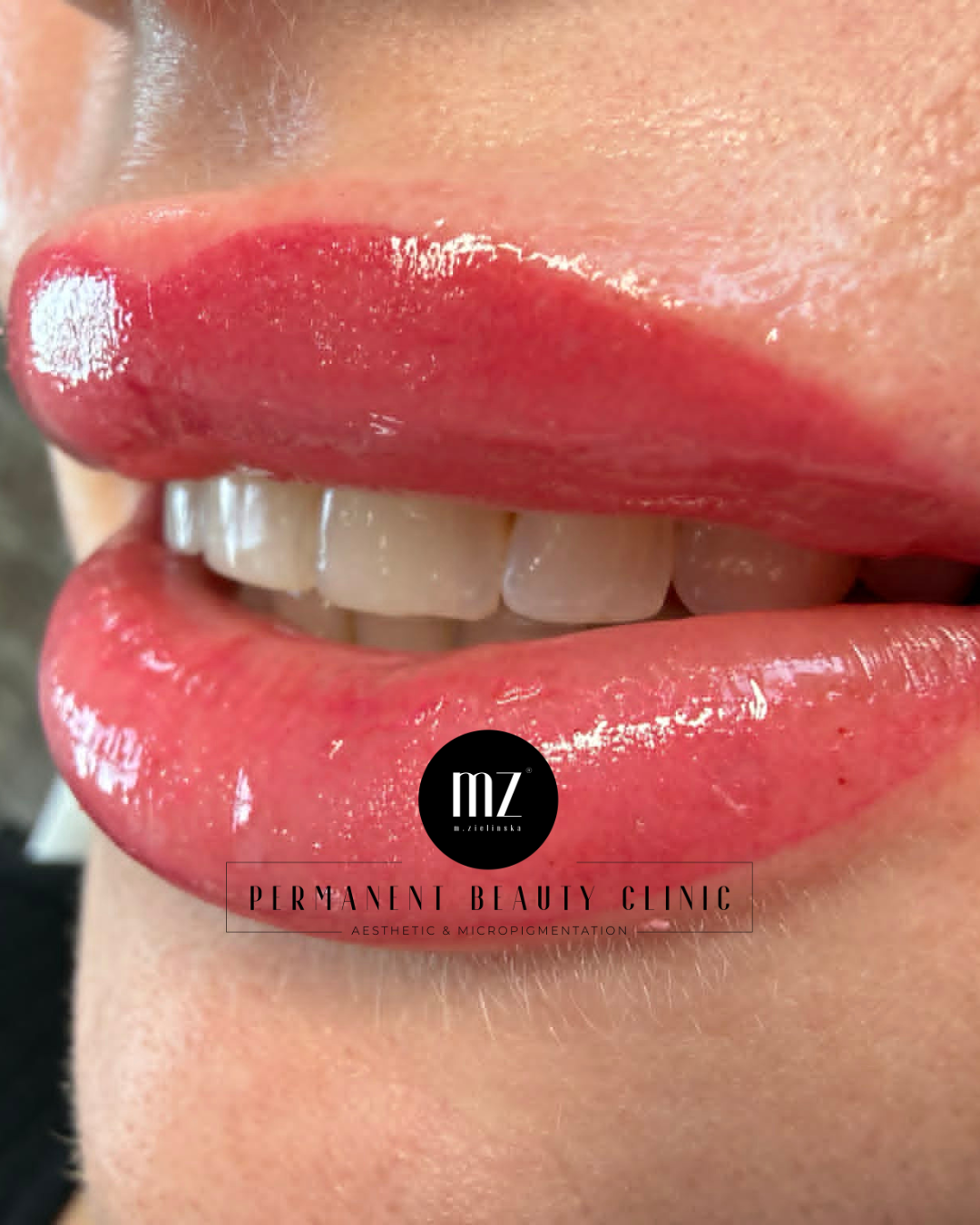
What Can Go Wrong With Lip Blush? The Truth About Lip Blush Risks
Lip blush will look beautifully natural when it is done well. But what can actually go wrong?
What can go wrong with lip blush? It’s a question many women ask before booking this increasingly popular permanent makeup treatment. Lip blush can create beautifully soft, natural-looking colour and definition, but like any procedure that breaks the skin, it comes with potential risks and complications.
You will usually see the beautiful before and after photos on social media. Freshly tinted lips, perfect shape and a gorgeous pop of colour. But permanent makeup is still a procedure, and I think you deserve to know what can happen when things don’t go according to plan.
This is probably not the question you see most often on Instagram. Usually, you see the beautiful before and after. Freshly tinted lips. Perfect shape. Soft pink colour. A little swelling that makes the lips look even fuller.
And then you see the caption: “Wake up like this!” But permanent makeup is still a procedure that involves putting pigment into the skin. So let’s talk honestly about what can go wrong with lip blush, without the usual scary stories and without pretending that complications never happen.
1. Your lips can swell
This one is actually not necessarily a problem. Some swelling, redness, tenderness and sensitivity immediately after lip blush can be completely normal.
Your skin naturally responds with some inflammation because we repeatedly puncture the skin with a needle.
The important question is not simply:
“Are my lips swollen?”
It is:
“Are they healing as expected?”
If swelling, pain or other symptoms become increasingly severe or persist rather than settling, that is something that should be assessed rather than simply ignored. Your aftercare matters too. I have a full guide to permanent makeup lip aftercare if you want to know what to expect during the healing process.
2. The colour can look completely wrong, before it looks right
This is one of the things that can panic clients. Immediately after treatment, lip blush can look much stronger than the healed result. During healing, the colour can then become surprisingly pale before gradually returning. So judging your lips on day two is a little like judging a cake before it has finished baking. It isn’t ready yet. The colour you see immediately after the procedure is not your healed result. This is also why I don’t choose a lip colour simply because it looks pretty in a pigment bottle. Your natural lip colour, undertone, skin, existing pigmentation and the pigment formula all matter.
3. The colour can heal unevenly
Sometimes one area retains more pigment than another. This can happen because skin does not behave like a perfectly uniform canvas. The natural lip tissue can vary. Previous cold sores, pigmentation, dryness, skin condition and individual healing can all influence the result. This is one reason why lip blush is not simply:
“Pick a colour → tattoo the lips → finished.”
The artist needs to understand the skin and anticipate how the pigment is likely to heal. And sometimes a second session is needed to refine the result.
4. Overlining can become a problem
Here is one of my biggest controversies. I don’t believe lip blush should be used to create a completely new lip shape. There is a difference between subtly enhancing the natural border and tattooing significantly outside the natural lip. Freshly treated lips can look beautifully defined when the pigment is placed close to the vermilion border. But if pigment is implanted too far outside the natural lip, you are not creating more actual lip tissue. You are tattooing the surrounding skin. And when the colour fades, that tattooed outline can become much more obvious than the client expected.
This is one reason I prefer natural definition rather than a permanent lipstick outline.
5. Cold sores can be triggered
This is particularly important with lip procedures. The trauma of tattooing the lips can trigger a recurrence of herpes simplex in people who are susceptible to cold sores. A published case report describes herpes simplex appearing after cosmetic lip tattooing. This is why I ask about your history of cold sores before lip blush. If you have ever experienced cold sores, discuss antiviral prevention with your doctor before treatment. Do not simply assume that because you haven’t had one recently, you are no longer susceptible.
My Lip Blush preparation, contraindications and aftercare information explains the precautions I recommend before treatment.
6. Infection is possible and hygiene matters
Let’s be very clear about this. A lip blush procedure breaks the skin. That means infection is a potential complication of any cosmetic tattooing procedure.
Research on permanent makeup and tattooing has documented infectious complications – you can read more about here, although serious infections appear to be uncommon. This is why hygiene isn’t something I consider an optional “extra”. Single-use needles, appropriate disinfection, clean working practices, preventing cross-contamination and proper aftercare all matter. I don’t want to impress you with how clean my treatment room looks. I want the procedure to be carried out in a way that reduces avoidable risks.
7. Pigment reactions can happen
This is the part that doesn’t get talked about enough.
Tattoo and permanent makeup pigments can, in uncommon cases, cause inflammatory or allergic reactions.
There are published case reports of delayed allergic reactions specifically involving cosmetic red lip tattoos, including reactions developing months after treatment.
A recent systematic review also highlights granulomatous reactions following tattooing and cosmetic micropigmentation, although these reactions are uncommon and the available evidence is largely based on published clinical cases rather than large studies of routine lip blush clients.
And this brings us to an important misconception:
“If I have a patch test, I’m completely safe.”
No. A patch test is mandatory when planning permanent makeup or a lip blush, but it cannot guarantee that you will never react to a pigment once we implant it into the skin. Some tattoo pigment reactions appear months or even years later, and several factors can contribute to these delayed reactions. A simple surface allergy test cannot predict every possible reaction.
That’s why I believe you should receive honest, realistic information about lip blush risks and complications, rather than a false promise that the treatment carries zero risk.
8. The healed colour may not be exactly what you imagined
And this is probably the most common “problem” I see discussed online. Someone chooses a beautiful pink.
They imagine:
“My lips will look exactly like this.”
But permanent makeup is not lipstick, so what affects the final results?
- natural lip tissue,
- skin type and undertone,
- existing pigmentation,
- pigment formula,
- healing process.
This is particularly important if your lips are naturally darker or unevenly pigmented. Lip blush can be used on pigmented lips, but the approach may be different and more than one session may be necessary.
I explain this in more detail in my article about Lip Blush for Dark or Pigmented Lips.
So, is lip blush dangerous?
I wouldn’t describe it that way. But I also wouldn’t tell you that it is completely risk-free.
Both extremes are misleading.
Permanent makeup is a cosmetic tattooing procedure. It has potential risks, just like other procedures that involve breaking the skin.
The key is understanding those risks, choosing an appropriately trained practitioner, having a proper consultation, disclosing relevant medical history, following preparation and aftercare instructions, and knowing what normal healing looks like.
And perhaps most importantly:
Don’t choose your artist based only on the prettiest freshly done photo.
- Look at healed work.
- Ask questions.
- Find out what pigments they use.
- Ask how they approach your natural lip colour.
- Ask what happens if you have old lip PMU.
And pay attention to whether the artist is willing to tell you when the treatment isn’t suitable for you.
Because sometimes the most professional answer isn’t:
“Yes, I can do that.”
Sometimes it is:
“I don’t think we should.”
And personally, I think that’s exactly what you should want from the person putting pigment into your skin.
Thinking about Lip Blush?
If you are considering lip blush in London and want a subtle, naturally tinted result rather than a heavy lipstick effect, you can see more about my Lip Blush treatments in London and Wandsworth here. I always assess the lips, discuss your expectations and explain the preparation and healing process before treatment.
Permanent Beauty Clinic
201 St John’s Hill
London SW11 1TH
📞 07814 525 372
📧 contact@permanentbeautyclinic.co.uk
This article is for general educational purposes and does not replace medical advice. If you develop symptoms that concern you after a cosmetic procedure, seek advice from an appropriate healthcare professional.