
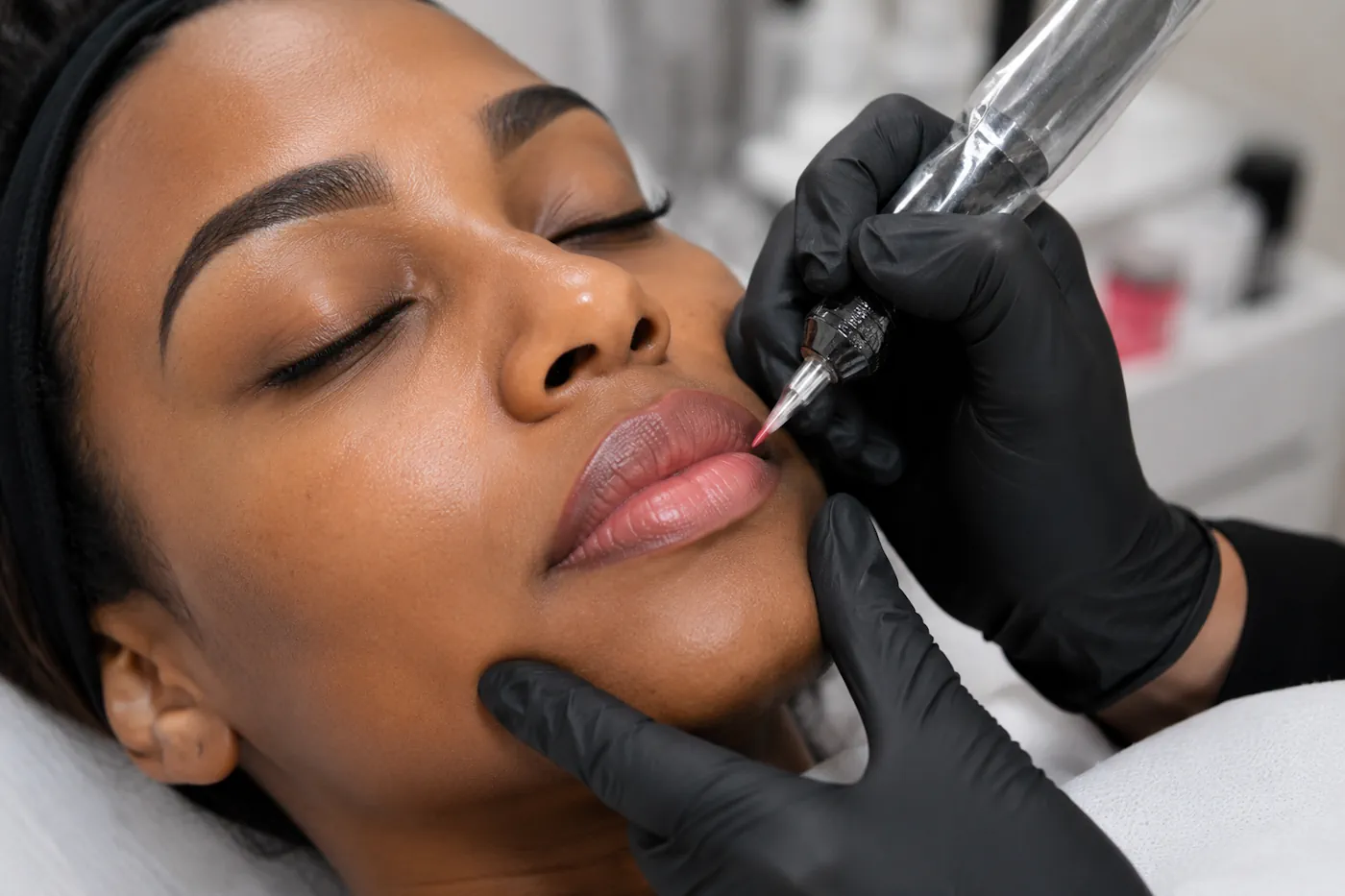
Lip Blush for Dark or Pigmented Lips. Does It Work?
Yes. It works. It just takes more skill and usually more sessions. Lip blush on dark or pigmented lips can give you a softer, more even colour, but the result rides on the artist and on what you expect walking in.
What causes dark or pigmented lips?
Some people are born with a deeper lip tone. Melanin sits more heavily in the lips, which is common in darker skin tones. Other causes build up over the years. Smoking stains the lips. The sun darkens them. Caffeine, some medications and simple dehydration all add to it, and the corners of the mouth tend to go darkest of all.
Why does this matter? Because lip blush is translucent. The pigment does not sit on top like lipstick. It mixes with the colour already there. On dark lips, that underlying tone shows through and shifts the final shade.
How lip blush handles dark lips
A skilled artist does not fight your natural colour. They work with it. The aim is to even the tone, soften patchiness and bring a little warmth back.
For very dark or uneven lips, the first job is often neutralising. The artist uses warm corrective pigments, usually with an orange or peach base. This cancels the grey, purple or blue tones that leave lips looking dull. It balances the canvas before any real colour goes on. Skip that step, and a pretty pink pigment can heal to a strange, ashy grey.
Once the base sits neutral, the artist builds colour in thin layers. Soft, buildable tones do the best work. The healed result looks natural rather than bold, which is the whole idea of lip blush.
You will need more than one session
Be realistic here. Dark lips rarely transform in one appointment. Most people need two sessions. Some need three.
The first lays the groundwork and neutralises. The lips heal, the colour settles, and the artist sees how your skin behaves. The second refines the shade and deepens it where it is required. Each round moves the lips closer to the tone you are after. Push for everything in one go and you get a muddy, patchy finish.
What the healing looks like
For the first few days, the colour looks dark and intense. Do not panic, this is meant to happen. Over the next week, as the lips heal, the colour lightens a lot, sometimes by more than half. Pigmented lips can heal a bit unevenly the first time around, which is exactly why that second session exists.
There will be some swelling and tightness early on. Keep the lips topped up with the balm your artist gives you. Steer clear of spicy food, hot drinks and direct sun while they settle.
Will the colour stay true?
On dark lips, colour retention is less predictable. The body sometimes pushes back against corrective pigments, and the natural tone tries to creep back. A good artist plans for this by picking stable, warm-based pigments and by building in that second session. A top-up every year or two keeps the colour fresh and stops the darker natural tone reclaiming the lips.
Choosing the right artist
This is the part that makes or breaks it. Lip blush on pigmented lips is advanced work. Plenty of artists are happy with fair, even-toned lips and come unstuck on darker ones.
Ask to see healed photos of lips like yours, not just fresh ones. Fresh photos flatter everybody. Healed photos show whether the artist can actually hold colour and neutralise well. A proper consultation and patch test tells you plenty. The right person will be straight with you about how many sessions you need and what shade is genuinely achievable.
So, is it worth it?
Lip blush works on dark and pigmented lips when an experienced artist neutralises first, builds the colour slowly and plans for more than one session. Go in patient, keep your hopes realistic, choose your artist carefully, and you can walk away with soft, even, healthy-looking lips that suit your natural tone.