
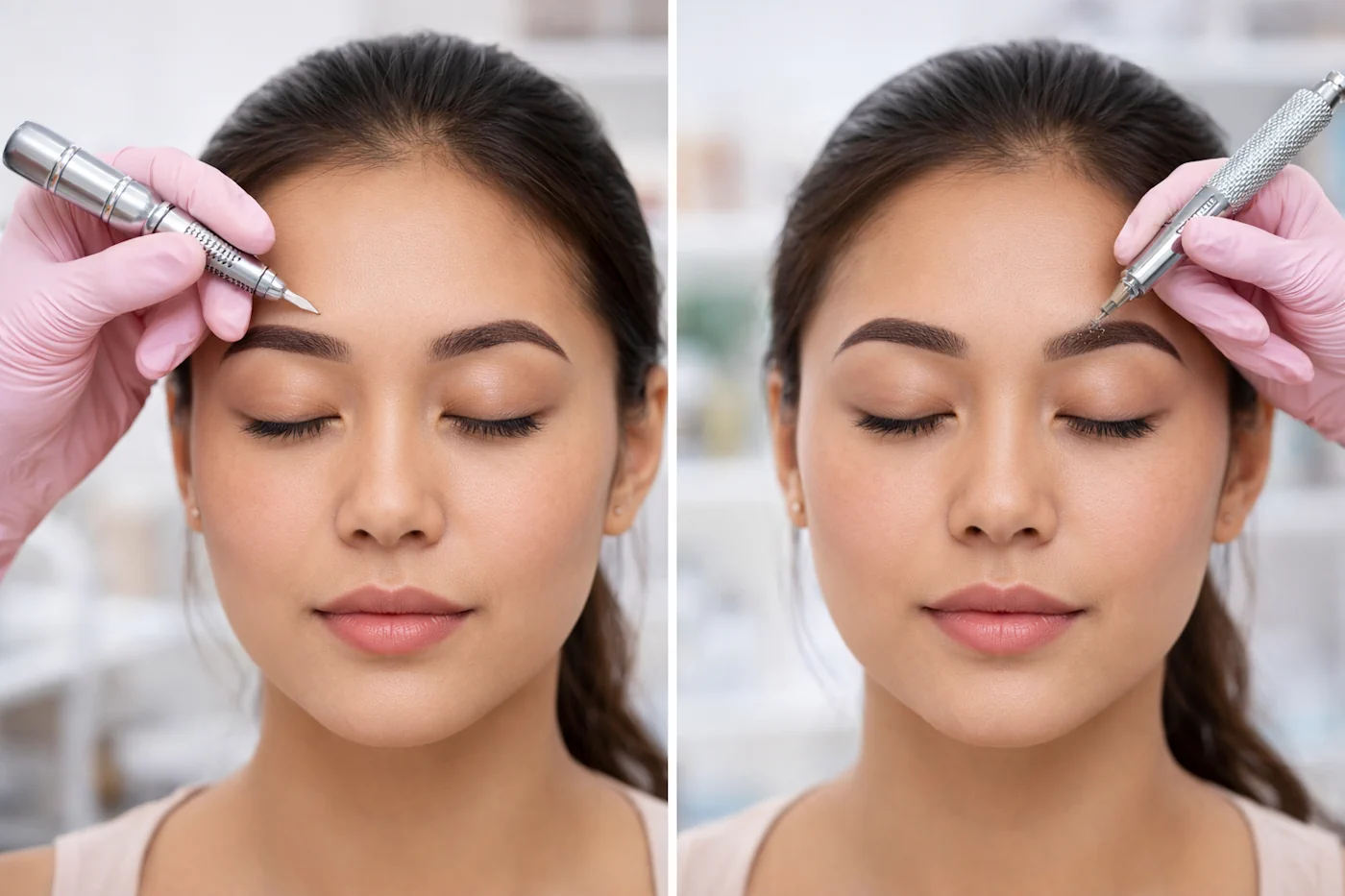
Microblading vs. Microshading: What’s Best for Your Brow Type?
Full, defined brows shape the entire face. They frame the eyes. They balance features. They create structure. Yet not every brow treatment suits every skin type or style preference. When choosing between microblading and microshading, consider your natural hair growth, skin condition, lifestyle, and desired finish. The right choice delivers clean definition that lasts. The wrong one fades fast or looks uneven.
Below is a precise comparison to help make a clear decision.
What Is Microblading?
Microblading uses a handheld tool fitted with ultra-fine needles. The practitioner draws crisp, hair-like strokes into the upper layers of the skin. Each stroke mimics natural brow hairs. The result looks soft and realistic.
This method is best for clients wanting a natural finish. It works best on those with normal to dry skin. When skin produces minimal oil, the pigment keeps its shape. The strokes remain sharp. The detail stays visible.
Microblading creates structure where hair growth is sparse. It rebuilds thin arches. It fills gaps caused by overplucking. It defines tails that fade with age.
However, oily or textured skin might blur the strokes. Large pores may cause pigment to spread slightly during healing. If your skin produces excess oil, strokes may fade faster and lose clarity within months.
Healing takes around ten to fourteen days. Brows appear darker at first. Colour softens as the skin repairs itself. A top-up session after 6 to 8 weeks perfects the result.
What Is Microshading?
Microshading uses a digital machine rather than a manual blade. Instead of drawing individual strokes, the practitioner layers tiny dots of pigment. This creates a soft, powdered effect. Think of a subtle brow tint or pencil finish.
Microshading is good for oily, combination, or mature skin. The machine implants pigment more evenly. The result looks diffused rather than sharply defined. That softness helps it age better on skin that struggles to retain crisp lines.
Clients who fill their brows daily with powder or pomade often prefer microshading. It delivers fuller coverage. It creates depth without the harsh look of heavy makeup.
The healing period mirrors microblading. Expect light scabbing and temporary dark colour. Once healed, the tone appears softer and more balanced.
Microshading often lasts longer on oily skin. The pigment settles in a more stable pattern. Fading looks gradual and even.
Key Differences in Technique and Finish
The distinction lies in both technique and outcome.
Microblading focuses on precision strokes. It builds a realistic texture. From a close distance, the brows appear natural and feathered.
Microshading builds density and depth. It creates a soft shadow across the brow. The brow will look fuller and more defined.
Microblading feels lighter. Microshading feels bolder. Neither looks artificial when performed correctly. The final effect depends on skill and pigment choice.
Pain levels remain similar. Both treatments use a topical anaesthetic. Most clients report mild discomfort rather than pain.
Which Brow Type Suits Microblading?
Choose microblading if:
- You have dry to normal skin.
- Your pores appear small.
- You want a realistic hair stroke effect.
- Your natural brows already hold some shape.
- You prefer a subtle definition.
It works beautifully on clients with patchy areas rather than complete hair loss. It adds detail without heavy shading.
Which Brow Type Suits Microshading?
Choose microshading if:
- You have oily or combination skin.
- Your skin texture looks uneven.
- You wear brow makeup daily.
- You want a fuller, powdered finish.
- You desire longer pigment retention.
It also suits mature skin. As collagen levels decrease, skin becomes thinner and more delicate. Machine shading places pigment gently and evenly.
Can You Combine Both Techniques?
Yes. Many clients choose combination brows. This approach blends microblading strokes at the front with shaded density through the arch and tail. The result looks structured yet soft.
Combination brows suit those who want realism with depth. They provide dimension. They prevent flat colour. They are good for mixed skin types.
Longevity and Maintenance
Microblading lasts between twelve and eighteen months on suitable skin. Microshading can last up to two years, sometimes longer, with proper care.
Sun exposure fades pigment. Skincare acids speed up colour loss. Annual refresh appointments maintain crisp definition.
Aftercare determines final results. Keep brows clean. Avoid sweating heavily for ten days. Do not pick at scabs. Protect the area from the sun.
Final Considerations Before Booking
Assess your skin honestly. Oily skin demands shading. Dry skin handles strokes well. Consider how you wear your makeup. Natural or bold. Minimal or sculpted.
Consult an experienced practitioner. Request healed results, not just fresh work. Healed brows reveal true skill.
The right technique shapes your face every single day. It saves time. It delivers structure. It creates polished symmetry without daily effort.
Choose the method that suits your skin, style, and expectations. When technique matches brow type, the results are seamless, balanced, and beautifully defined.