
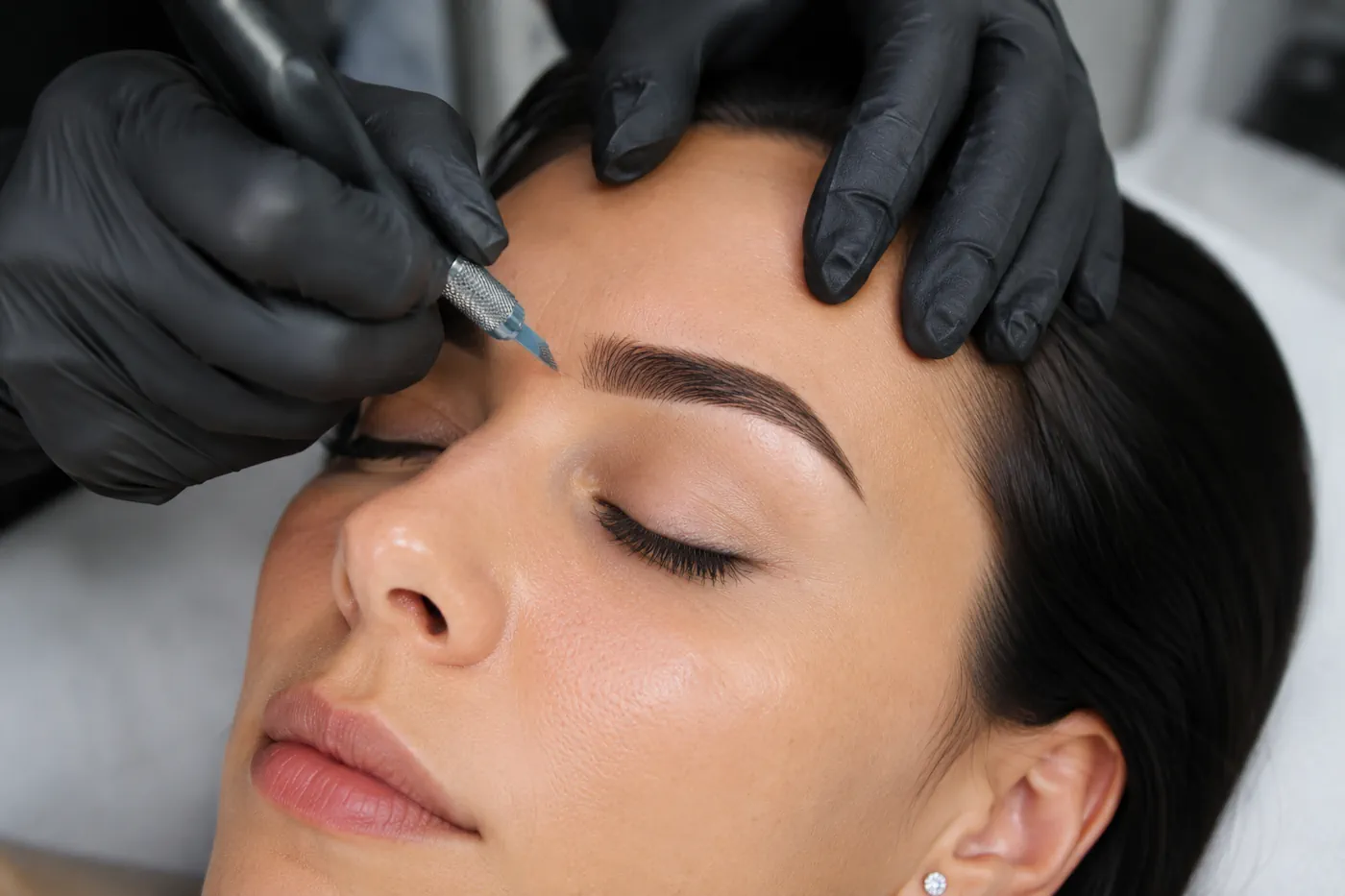
Is Microblading Good for Oily Skin?
The honest answer is: usually not. Microblading on oily skin fades faster, blurs sooner and loses the crisp hair strokes that make the treatment worth paying for. If your skin runs oily, there is nearly always a better option, and a decent artist will say so before you book.
Why oily skin and microblading clash
Microblading cuts fine, hair-like channels into the skin and lays pigment inside them. The whole look depends on those strokes staying sharp and separate. Oily skin works against that from day one.
Oily skin makes more sebum. That oil pushes the pigment around and softens the edge of every stroke as the brows heal. Strokes that should read as individual hairs blur into a soft grey shadow. Artists call this migration, and oily skin causes more of it than any other type.
Bigger pores make it worse. Pigment sits less neatly in that texture. The strokes spread, and within a year. Many oily-skinned clients find their brows have gone patchy.
How fast does it fade?
On dry or normal skin, microblading can hold for two to three years between touch-ups. On oily skin? Maybe twelve months. Often less. The oil breaks the pigment down and lifts it out of those shallow cuts. You end up needing top-ups twice as often, which costs more and means more needling of the same skin.
The better choice for oily skin
Want defined brows but have oily skin? Powder brows or ombré brows are the smarter pick.
Rather than fine cuts, this method uses a machine to lay down thousands of tiny pigment dots. The finish looks like softly filled-in brow makeup, not separate hairs. Because the colour sits as shading instead of thin lines, oil cannot smudge it the same way. Powder brows keep their shape far better and last longer between sessions.
There is also the combination brow, which mixes a little shading with a few hair strokes at the front. You get some texture without leaning on strokes alone. It suits skin that is oily but not extremely so.
Can microblading ever work on oily skin?
Sometimes. With the right hands and honest expectations. If your skin is only mildly oily, a skilled artist can still get a respectable result through careful technique and the right pigment. The strokes will soften more than they would on dry skin. You will still be back for touch-ups more often.
So much rides on the artist. Someone who treats oily skin all the time adjusts their depth, pigment and stroke pattern to give you the best shot. An inexperienced one hands you blurred brows by spring. Use the patch test and the consultation properly.
How to tell if your skin is oily
Check the mirror a couple of hours after cleansing. Shine across the forehead, nose and brow area means oily skin. Big visible pores and makeup that slides off by lunchtime are other tells. Not sure? Your artist can assess it during the consultation and steer you to the technique that will hold.
Caring for brows on oily skin
Good aftercare buys you longer-lasting brows, whatever your skin type. Keep the area clean and dry while it heals. Once healed, blot away excess oil throughout the day. A light, oil-free routine around the brows helps the pigment stay put, while heavy creams and exfoliating acids near the brow speed up fading, so keep them clear of it.
Book your touch-up when your artist tells you, not when the brows have already faded badly. Catching them early holds the shape and spares the skin extra work.
What it comes down to
Microblading favours dry to normal skin. On oily skin, it fades fast and blurs. Powder or combination brows tend to give you a cleaner result. Book a consultation, be straight about your skin, and let a skilled artist match the technique to what you actually have.