
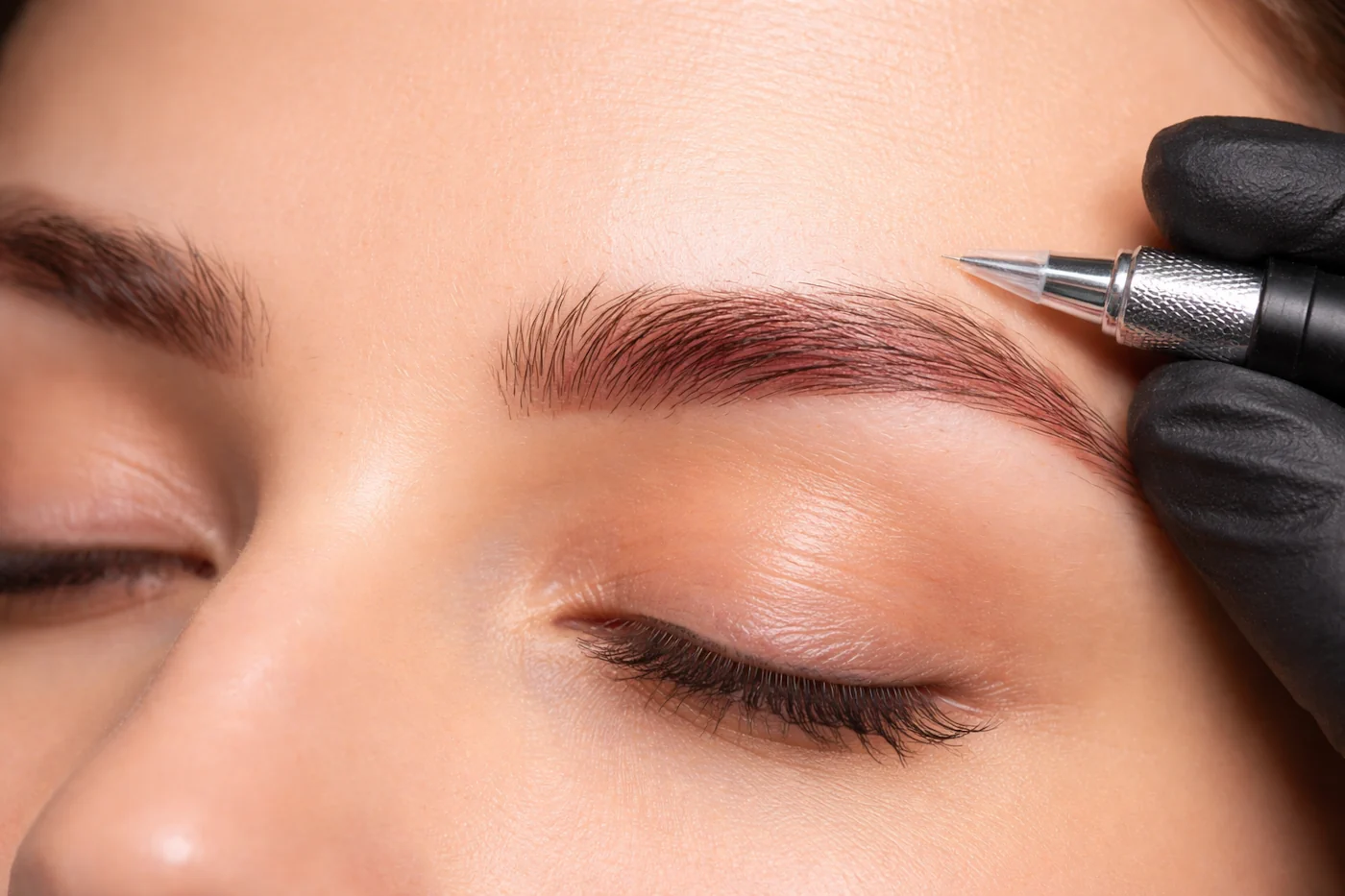
Why Did My Microblading Turn Red?
Microblading should leave brows soft, natural, and balanced, with pigment healing into a shade that matches the client’s features. However, some notice a strong red, pink, or salmon tint months later—a worrying shift after initially perfect brows.
Red microblading rarely appears without cause. Several technical and skin-related factors favour warm undertones in pigment. Understanding these causes helps prevent the problem and guides proper correction.
Pigment Composition Plays a Major Role
Every microblading pigment contains a blend of base colours. Most brow pigments combine black, brown, yellow, and red molecules (the smallest particles that make up the pigment) to create natural shades. When the darker molecules break down faster than the warmer ones, the leftover colour often appears red or pink.
Low-quality pigments often cause this. Cheap formulas with heavy iron oxide red look rich initially, but as black tones fade, the red base stays.
High-grade pigments use balanced formulas. They contain stable carbon blacks and neutral modifiers that prevent strong red shifts. Skilled artists choose pigment lines designed for long-term colour stability, not just immediate results.
Clients rarely see the difference during the procedure. The change appears slowly as the skin processes the pigment.
Skin Undertones Affect Final Colour
Skin tone influences how pigment heals. Every person carries a mix of warm, cool, or neutral undertones beneath the surface. Warm skin often pulls pigment toward orange or red shades.
When a technician selects a pigment without adjusting for undertone, the healed result may turn warmer than expected. For example, a neutral brown pigment applied to very warm skin may turn reddish brown.
Experienced artists study undertone (the core hue beneath the skin), melanin level (the amount of natural pigment in the skin), and vascular tone (the look caused by underlying blood vessels) before choosing pigment. They often add a cool modifier, such as olive or ash, to balance warmth. Without this adjustment, red tones can appear within a few months.
Sun Exposure Speeds Up Colour Shifts
Ultraviolet light breaks down pigment molecules quickly. Brows that receive frequent sun exposure often fade unevenly. Dark tones weaken first. Warm tones stay visible longer.
This process leaves behind rusty or pinkish brows. Clients who tan regularly or skip SPF notice colour changes more quickly.
Sun protection protects pigment stability. Daily use of broad-spectrum SPF, hats, and shade slows pigment breakdown. Even short exposure adds up over time. Brows sit directly on the face, so they absorb intense UV exposure.
Improper Depth During Microblading
Microblading requires precise depth. The blade must place pigment in the upper dermis, just beneath the epidermis. If the artist works too shallowly, the pigment fades rapidly. If the blade cuts too deeply, the colour heals unpredictably.
Deep placement often causes cool tones to fade first, leaving warm undertones behind. The brow strokes then appear red, peach, or coral.
Proper technique prevents this issue. Skilled technicians maintain consistent pressure and stroke depth across the entire brow. Precision ensures the pigment heals evenly and retains its intended shade.
Old Pigment From Previous Procedures
Many clients seek microblading after older brow tattoos fade. Residual pigment often remains beneath the skin. New pigment interacts with that leftover colour.
If the previous tattoo contained strong red or orange tones, the new pigment may eventually reveal them again. Even when the old tattoo looks faded or grey, warm undertones often sit deeper in the skin.
A trained artist examines the brows carefully before treatment. In some cases, the technician recommends pigment correction or laser removal before new microblading begins. This step prevents red tones from resurfacing later.
Skin Type Influences Pigment Behaviour
Oily skin processes pigment differently from dry skin. High oil production can push pigment outward during healing. The skin then loses darker particles faster.
When darker tones fade first, warm molecules dominate the colour. The result often appears reddish-brown rather than neutral brown.
Large pores and active oil glands also blur fine strokes. This softening effect reduces contrast and makes warm tones more visible.
Artists usually adjust technique and pigment choice for oily or combination skin. Powder brows (a technique using dots to create a shaded look) or hybrid methods (a mix of microblading and shading) sometimes yield more stable results for these skin types.
Oxidation During Healing
Fresh pigment always appears darker immediately after treatment. Oxygen exposure and skin chemistry then trigger oxidation. This process changes the pigment colour slightly during healing.
Poor pigment formulas oxidise unevenly. Black particles degrade faster, revealing red bases underneath. Months later, the brows may appear brick red or dusty rose.
Stable pigments undergo controlled oxidation. They heal into balanced browns rather than warm reds.
How Professionals Correct Red Microblading
Red brows rarely require complete removal. Professionals often correct the colour using neutralising pigments. Green or olive tones cancel out red according to colour theory.
During a correction session, the technician deposits a thin layer of cool modifier pigment into the brow area. This step restores a balanced brown shade.
Some cases require saline removal or laser treatment, especially when the red pigment sits deep in the skin. Once the unwanted colour fades, the artist can rebuild the brows with fresh strokes and balanced pigment.
Prevention Starts With the Right Artist
Proper training and knowledge of pigments prevent most colour shifts. Skilled technicians study skin undertones, pigment chemistry, and blade control before performing treatments.
They choose professional pigment lines. They customise colour blends for each client. They also clearly explain aftercare, including sun protection and skincare limits.
Clients who research their artist carefully see far fewer problems with red microblading. Strong technique and high-quality pigments produce brows that heal naturally, remain soft and stable for years.
3 Comments
Naureen Qureshi
Who can you recommend I go to as the pigment used has stained my eyebrows red and I’m scared if I use laser treatment my eyebrow hair follicles will be burnt every session and not grow back due to the laser removal process. Please assure me this won’t happen and were do you recommend I go in the north west uk
per-admin
Hi, and thank you for taking the time to read my post and ask this question.
Of course, without seeing your eyebrows and knowing what technique and pigments were used, how long ago the treatment was done and the current condition of your skin, I can only give general advice.
First of all, I completely understand your concern. Red-looking eyebrows don’t always mean that there is simply red pigment left in the skin. Sometimes it is the result of how the pigment formula has changed over time. For example, if the original pigment used was based on iron oxide black, the darker component can fade first, as iron-oxide-based black pigments can fade more quickly than, for example, red iron oxide, leaving warmer red tones behind. In other cases, the redness can be related to scar tissue or changes in the skin, which can happen particularly after microblading.
The best way to find out what is actually causing the redness is to have a consultation with someone who specialises in PMU removal. They can assess the colour, depth and condition of your skin and recommend the most appropriate method.
Regarding your concern about laser affecting your eyebrow hair, laser removal does not necessarily affect hair growth when performed correctly. The correct settings, safe equipment and, most importantly, an experienced practitioner are essential.
I would also discuss saline or chemical removal during your consultation, as this may be a suitable alternative depending on the pigment and condition of your skin. Many professional saline or chemical removal solutions also contain ingredients designed to support skin recovery and improve its condition during the removal process. Sometimes more than one treatment is needed to achieve a satisfactory result.
My recommendation would be not to rush into another treatment. Find someone experienced in PMU removal and let them assess your brows properly before deciding which method is safest and most suitable for you. I am sorry but I cannot recommend anyone in North UK.
Best Wishes
Marta
Naureen Qureshi
Who can you recommend I go to as the pigment used has stained my eyebrows red and I’m scared if I use laser treatment my eyebrow hair follicles will be burnt every session and not grow back due to the laser removal process. Please assure me this won’t happen and were do you recommend I go in the north west uk